„Horses, and in fact their whole species, are the ones who helped us as humankind build modern civilisation."
That sentence is on our home page and our whole association stands behind it. It is not a slogan. Before engines came, horses pulled everything that had to move: the plough, the cart, timber out of the forest, and also machines we take for granted today. Here are a few examples from our own country.
A mill that water did not turn
In Košice, on Zbrojničná Street, a round building still stands that was built just after 1400. It is called a dry mill, and sometimes a horse mill. Its stones were turned neither by water nor by wind, but by horses. Saltpetre was ground in it to make gunpowder for the town.
Dry mills were built where there was no stream strong enough. The horses walked in a circle and drove the stone through wooden gearing. Today that Košice rotunda is an exhibition hall, and most people who walk past it have no idea what it once was.
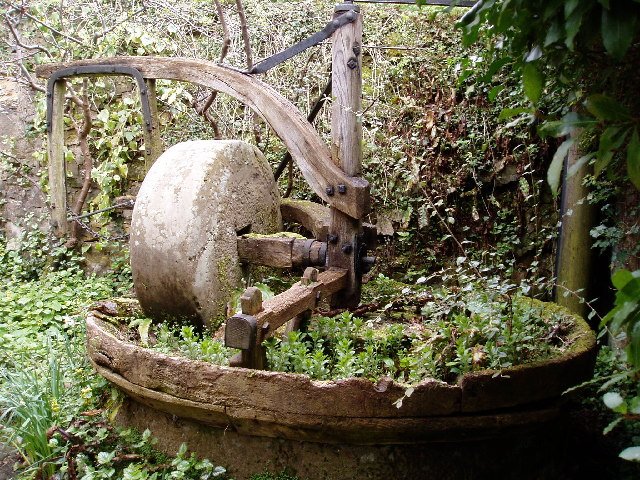
Photo Bob Tinley, CC BY-SA 2.0, Wikimedia Commons
A horse gin in the yard
What our grandparents knew was smaller and closer to home. It was called a žentúr, elsewhere a gápeľ — a horse gin. One or two horses walked in a circle around the yard, a shaft running along the ground carried the power into a machine, and that threshed grain, cut chaff or ground feed.
It was the first „mechanisation" on a farmstead. Not an engine, but a horse walking in circles for hours. On old farmyards the iron parts of horse gins can still sometimes be found, usually overgrown somewhere beside the barn.
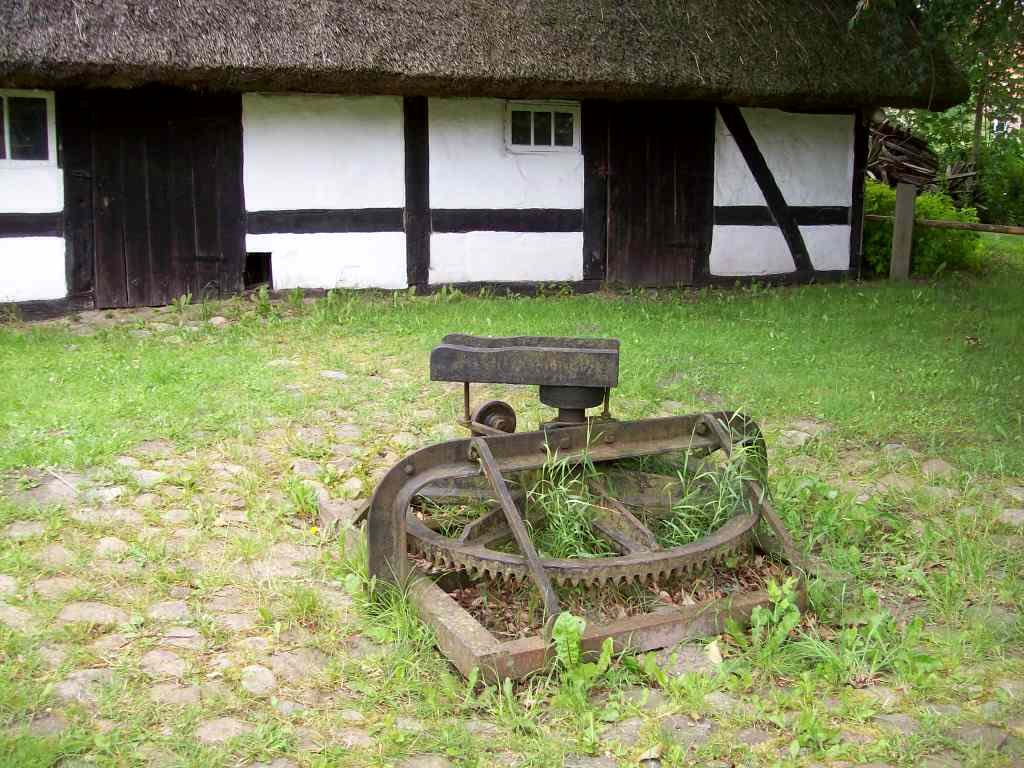
Photo Andre Kaiser, public domain, Wikimedia Commons
The mine
Horses also pulled where the sun does not reach. In the mines they drove the whims that lifted ore and water out of the shafts, and the trucks underground. Without them, mining — on which the wealth of towns such as Banská Štiavnica was built — could not have gone any further.
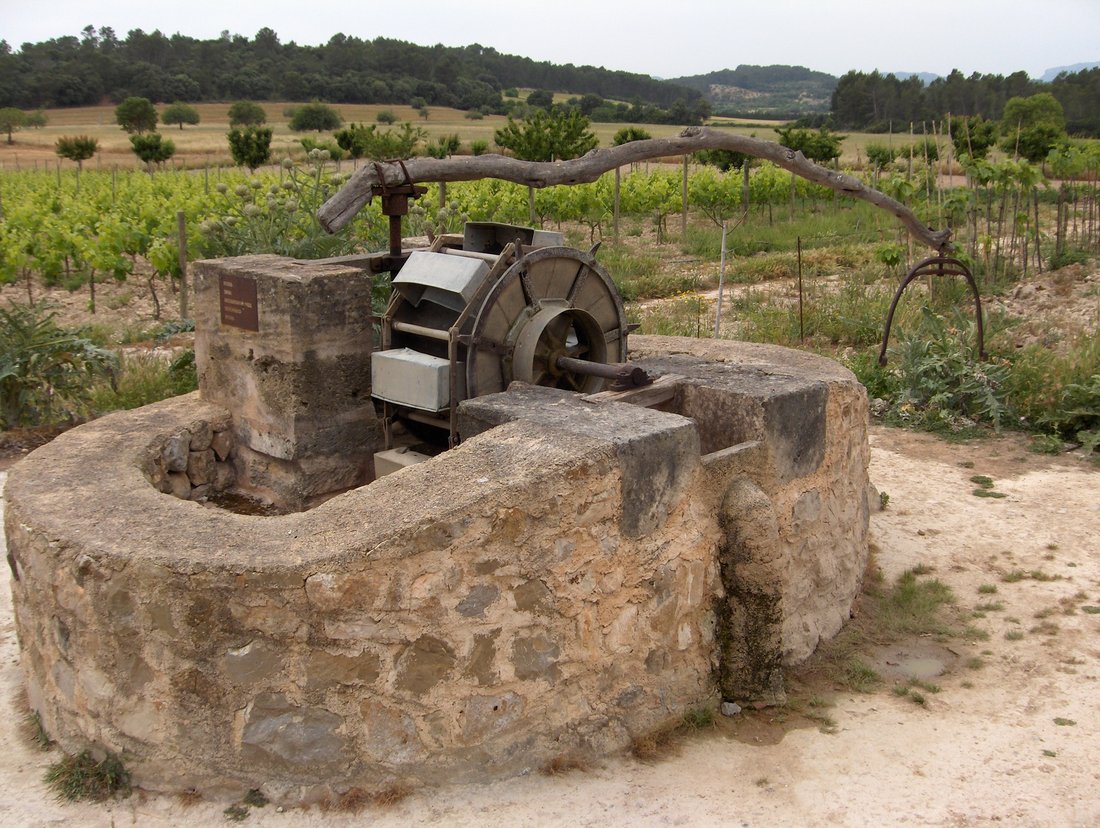
Photo Sethaphopes, CC BY-SA 3.0, Wikimedia Commons
And then the machines came
The tractor, electricity, the engine. It did not happen overnight, but within a single generation the horse disappeared from the yards. What was left of him was a leisure hobby, and the draught horse became what we hear most often today: a big horse that eats a lot.
That is exactly why we write this here. Not out of sentiment. Once you realise everything these horses hauled, it is easier to understand why, after years of hard work, they deserve a peaceful end and not the slaughterhouse.
Working with horses today → Our horses and their stories →