Furmanstvo — working with draught horses — is a craft you do not learn from a book. It is work with a horse: skidding timber in the forest, hauling with a cart, work in the field. We came to it by a roundabout route and stayed with the horses. Here we write about the craft and about how draught horses still work today.
Us and the craft
We are not furmani — draught horsemen. We are farmers who breed draught horses and help them. We got a taste of the craft along the way, through friends we met when we were looking for our first horse.
They started going with us to look at horses and advising us which one to buy. That is how we got to know each other better and better. Then we started going to competitions with them, and we helped co-organise the local ones. Through those we met more and more furmani from the area.
We slowly started training our young horses so that they too would know how to do something. The harness had to be made to measure, and in time we also bought a new forecart, so we could teach the horses and take them out. We used to go to the furmani in the forest, and some of them came to us to pull timber on the farm.
It never took hold of us completely, though. There was a pile of other building work on the farm, and it was always easier for me to take the tractor and get it done quickly. And then came the first sad times with our horses. We were always closer to horses than to people, and so we began to care more for the horses than for the work with them.
That is why we write about this craft as people who know it from close up but do not practise it. Without judging and without lecturing.
When you are friends with a horse
A friend rang me recently.
He has a young mare at his place. Completely raw. Nobody has ever trained her, she has never done a thing. So he decided to take her out on a lead and do a little lungeing with her.
She walked out of the stable calmly and did not pull. They had a little run about on the meadow. When he saw how she was cooperating, he called his daughter to bring the collar. She stood there calmly and it went on her as it would on an old horse. So he tried the side pieces too. No trouble with those either. So he tried how she would go. She went like an old horse. So he tried a small piece of timber. She pulled like an old horse.
He spent two hours trying one thing after another and she cooperated with all of it.
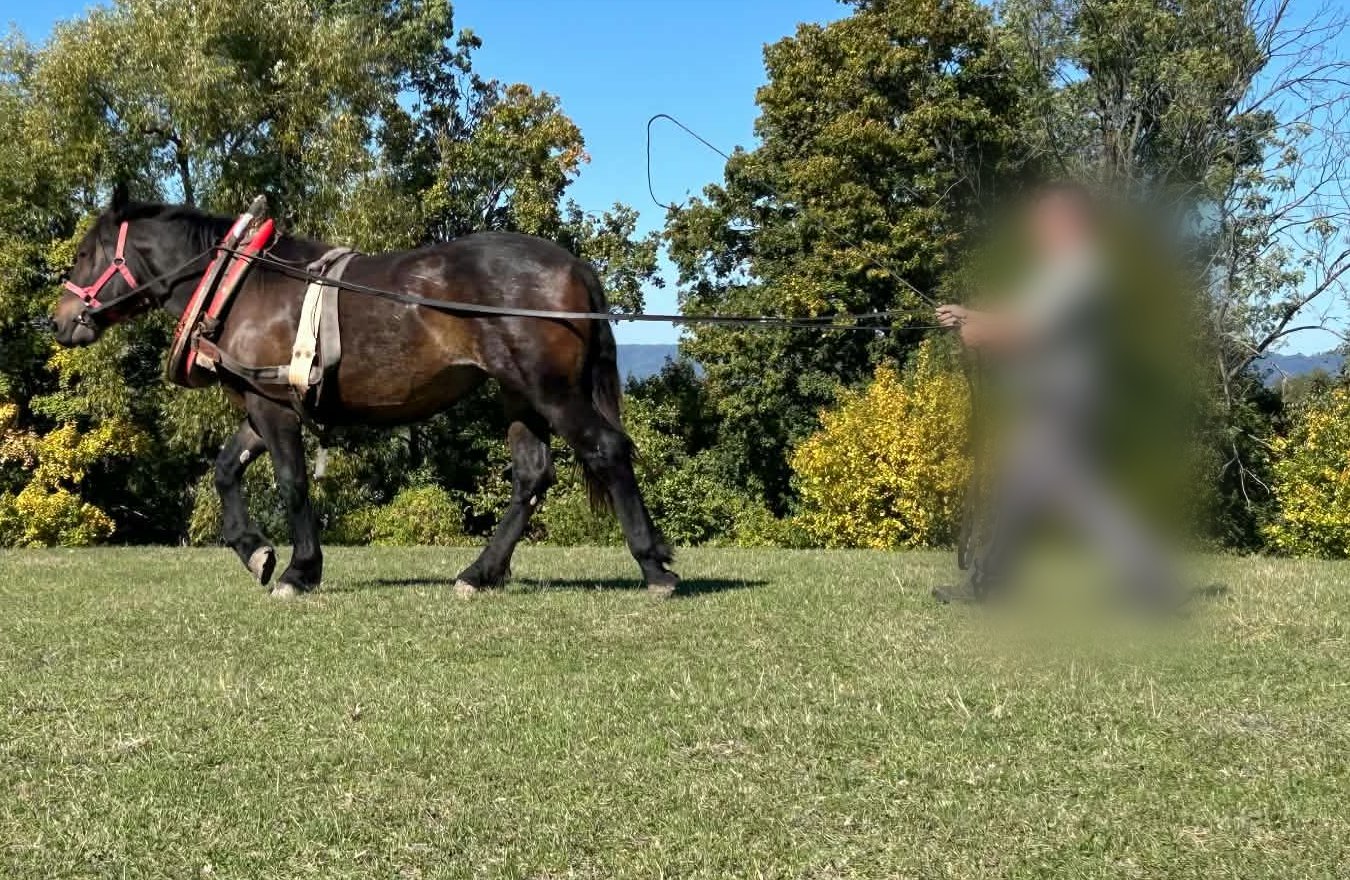
That is not how it normally goes. A young horse learns in small pieces and it takes weeks or months. First the headcollar and being touched all over, then leading, then standing still, then lungeing, and only much later the individual parts of the harness, one at a time. Pulling comes last of all. In two hours my friend went through what is usually the work of a whole autumn. Not because it was a good way to do it. But because that mare let him.
When they were already heading back from the training to the stable, he tried one more thing. He turned her round in front of the stable and sent her back to the meadow, because he wanted to know whether she was only going after the herd. She went back calmly, like a trained horse.
He told me the whole thing and could not make sense of it. He stood there staring, as he put it himself.
I cut in on him: there you are. When you are friends with a horse, she will do anything for you.
Because that mare is not trained. She is simply used to the people around her being all right. Last year we helped treat her at his place and went over to change her bandages. And from all that care she is thoroughly spoiled. That is exactly what has stayed with her. She did not know what a collar was. But she knew that the man putting it on her meant her no harm.
A horse in the forest
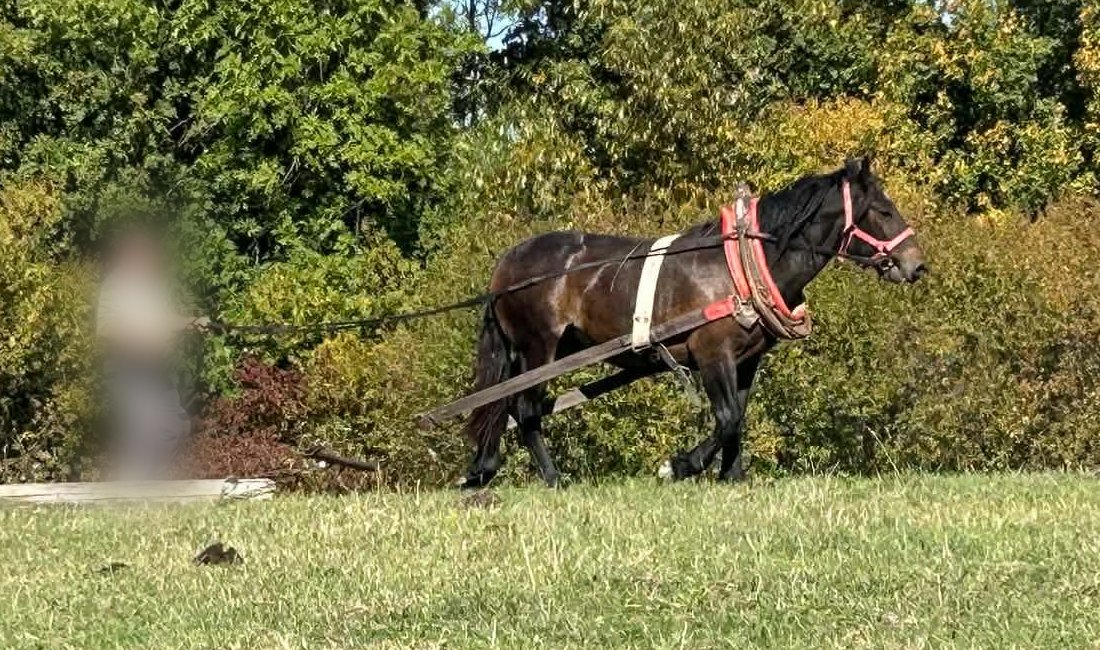
Skidding timber is what most people picture when they think of working with horses. A horse gets to places a machine cannot reach, and leaves no churned-up ground behind.
A horse and a cart
It is not only the forest. It is also hauling with a cart, work in the field and everything that used to be done with a horse in harness.
Harness
A harness is not bought like a pair of shoes. It has to fit that particular horse, otherwise it rubs and the horse pays for it on the shoulder or the back. Ours had to be made to measure.
Competitions
At the draught horse competitions we started out as spectators and ended up among those who help organise them. It is where the whole area comes together and where there is a great deal to pick up just by watching.
When a horse is finished working
This is the point where our road and the furman's road part. A horse that is injured or grows old stops being usable and starts costing money. It is not that he is not fond of the horse. An injured draught horse is an enormous problem for him.
This is where we come in. Steiger is exactly such a case: after an injury to his hind leg, his owner gave him to us instead of sending him to the slaughterhouse.
Steiger's story → What horses hauled, a piece of history →