This is the longer version of what is on the home page. How we got from building garden gazebos to a herd of draught horses on an overgrown hillside — and why we ended up founding an association.
We used to build roofs
My brother and I had a small family business. We built gazebos and roofs and it made us a living.
Then came the 2008 crisis. It reached our kind of work with a delay — by 2012 there was no longer enough of it. And it was bringing me a huge amount of stress.
A way of life that felt close to us
At that time the reality show Farma was on TV. That farming life felt close to us — Milka and I both come from small farming families, so it was nothing foreign. It was more something we remembered.
So I started looking into the land around us. We began with bees.
Sixty-five hectares nobody wanted
After a while I agreed with the local co-operative to take over some land. Not the good land — they kept that. We got the parts that were no use to them: overgrown with scrub, on a slope where you cannot work with big tractors.
But it was right behind our house. And there were about sixty-five hectares of it.
Two goats, two sheep and a first tractor
Milka and I started small. Two goats, two sheep, bees, a first tractor and the first second-hand implements. And a test of whether we could make hay at all — on two hectares to begin with.
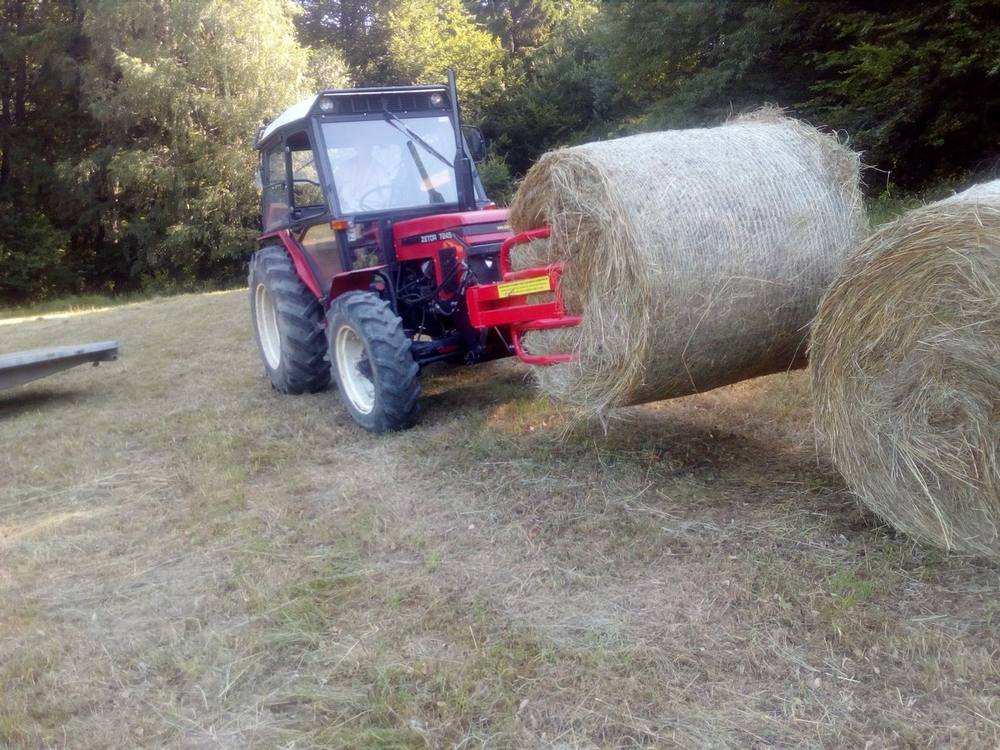
Scrub
We started clearing the rest of the land of scrub by hand. And that was hard going. Me with a big saw, Milka with a small saw, crawling on all fours through the thicket. Hands covered in thorn scratches.
We understood fairly quickly that we would never clear it this way. So we found a company that does this work, agreed terms, and they started clearing. Except they only took the thick timber and left the brush. That was left to us again.
That was when Milka sold her grandmother's house and we put the money into machinery. A forwarder for forty thousand, which we used to collect the cut brush. And alongside that we were building fences by hand.
A plan that changed along the way
Originally it was meant to be proper commercial farming — goats, milking, meat. Along the way we found that building it from scratch is not that simple. And if only it had been an open meadow — it was an inaccessible slope overgrown with scrub.
But we kept at it and kept building. And time went on.
A horse that was meant to check the fence
When the big fence was finished, the idea came to get a horse. We were going to check the fence from horseback — it is long and on foot it took forever.
And so we were joined by Lucinka.
We checked the fence on horseback barely twice. By then we had fallen in love with horses.
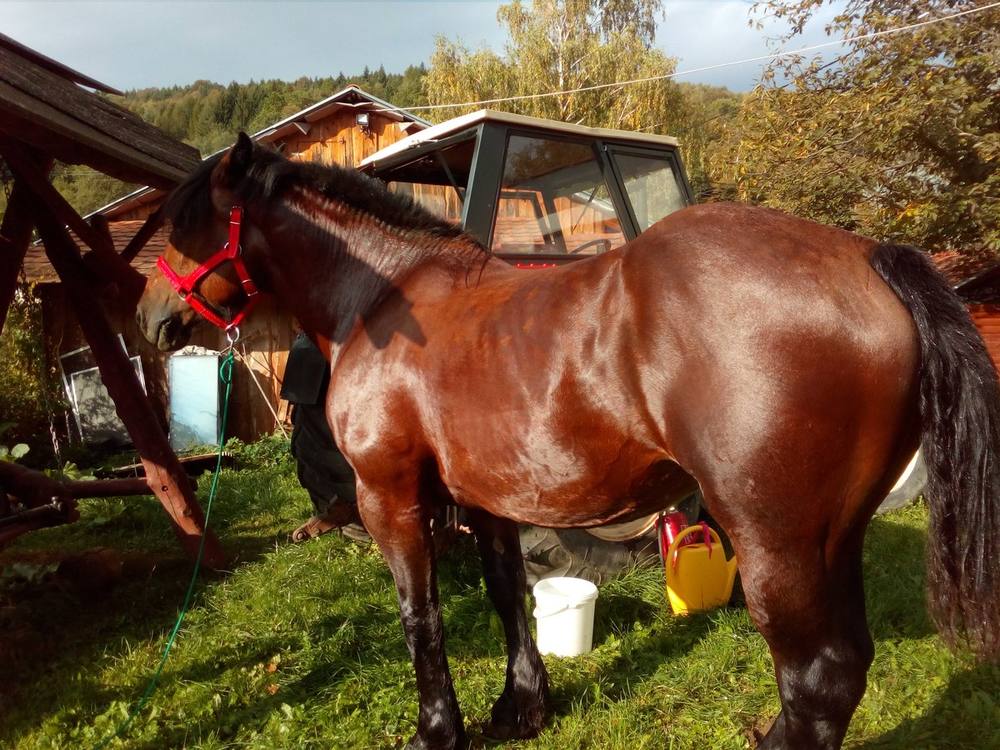
A horse is a herd animal
One horse cannot stay on its own. We learned that quickly.
Not long after, a neighbour offered us a pony he had in his yard. He had lost his land and had nowhere to keep him. So Luciška got a friend.
Soon after that we found a beautiful big mare online. We went to see her, we liked her, and so we were joined by Najka.
It was only while loading her that someone said it would be a shame for her to go for meat. That was when it dawned on us where she had been heading if nobody bought her. So without knowing it, we had rescued our second mare.
The pony could not stay with us in the long run. On such a large pasture he overate and foundered — ponies are sensitive to rich grass and do not know when to stop. So we found him a new home with a lady whose father is a vet. There he has the supervision he needs.
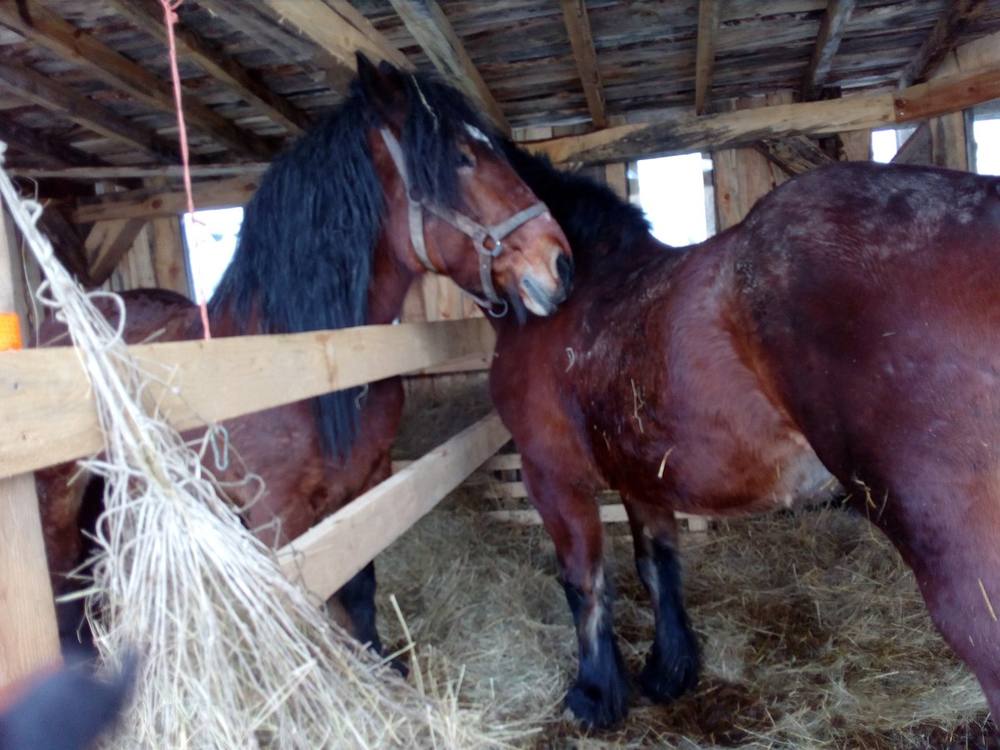
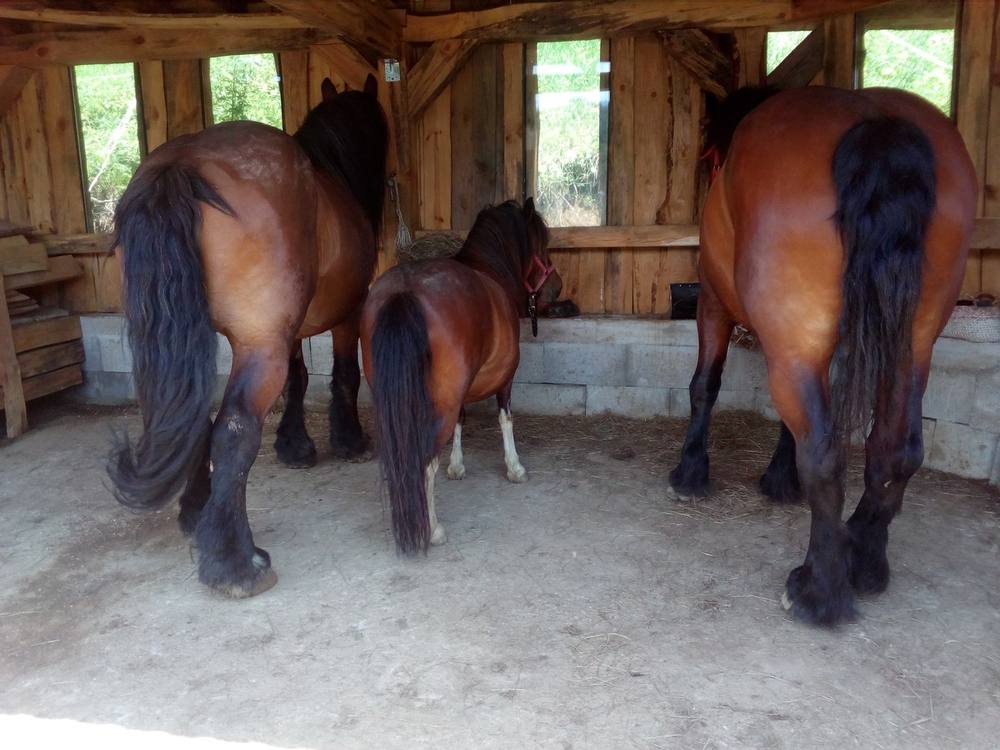
How we ended up among the draught horsemen
Luca was a working mare from a furman — a draught horseman — who helps organise the local draught horse competitions. And even before we brought her home, we took another furman along to look the horse over, one who also helps run the competitions.
That is how we got into their world. Among the furmani and fully among draught horses.
And there we saw how these horses live. How they work. And what problems they have.
More horses came
Time went on and more horses came. Our own too — we tried breeding them and selling them on.
Except we fell in love with them. We raised them from day one and we can no longer sell them. They are simply part of our family.
And so it went on. More horses came — rescued and born here. And with them came experience, worries and strong stories.
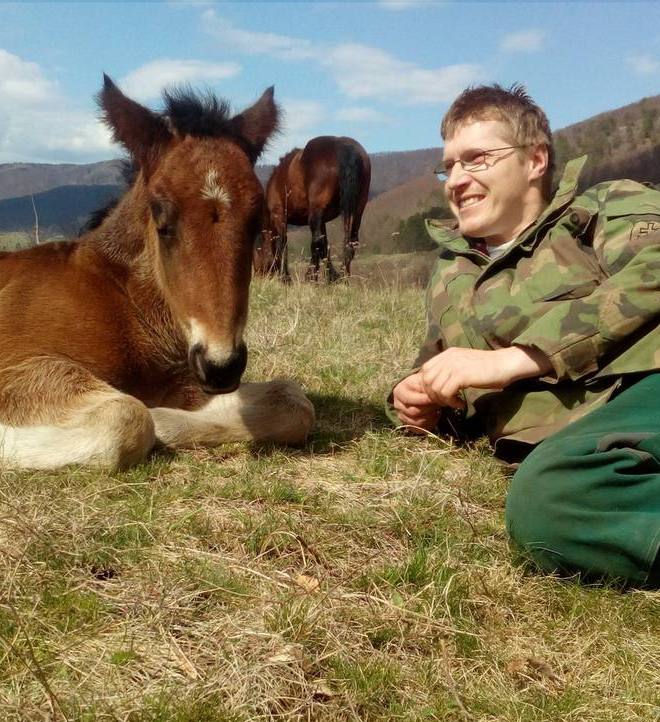
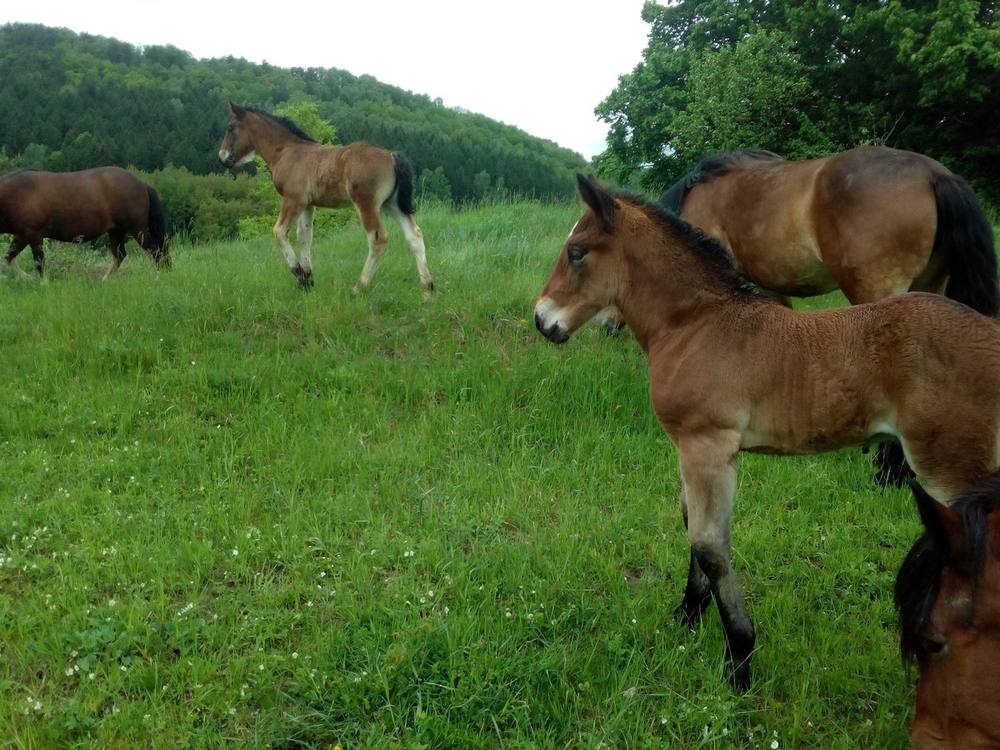
We write the horses' stories in detail elsewhere — you will find them all here.
How we learned it
We are not vets and we are not farriers, and we have never claimed to be. Almost everything we know about horses we learned from the ones who came to us damaged. What we know about hooves, we know because Zuza arrived with shoes she had been wearing for a year, and Bela with a torn coronet band. What a few days standing in a stable does to a horse, we know because of Rigo's. The knowledge reached us through damage, not from a textbook.
That is why we write here about what went wrong as well.
And with the horses came people
As the horses came, so did the work. And with it, people arrived one at a time — never all at once, always gradually, the way it goes on a farm. Some came to help once and stayed.
Jarka is a friend of ours, and when we were setting up the association it felt natural that the three of us would found it together. Martin comes to drive the tractor and make hay with us. Vojo, a young farmer and tractor driver, turns up, gets into the tractor and works. Aďa and Šimon are students; they have little time, but when they can, they gladly come.
We name everyone who helps us on the Thank you page.
We have been building this for years
We are farmers. And farming here means that what we earn goes back into the farm — into fences, into machinery, into hay for the winter. We have never taken anything out of it, and we never planned to. There was always something to finish, repair or build.
We have been building it for over ten years and we are still not done. That is how a farm works — it will never be finished, only the most urgent thing moves on.
The association was not founded because we had run out of money. It was founded so that we could go on helping. We had been helping horses in need for years before it and we would do it without the association too — we simply reached the limit of our own means. Then came Rigo and his rescue took months. And for the next horse that needs the same, we can no longer manage it out of our own pocket.
Depending on money when an animal needs help is not a pleasant thing. But a horse will not wait for the world to change.
We did this for years as a private matter of ours. The association turned it into something someone else can take part in — and above all something that can be seen. Our account is transparent, and what happened for that money is written up with each horse.
And the rest you already know
We have bred draught horses for years and rescued some of them along the way. At the end of 2025 we founded RIO o.z. — named after the colt Rio, whom we did not manage to save.